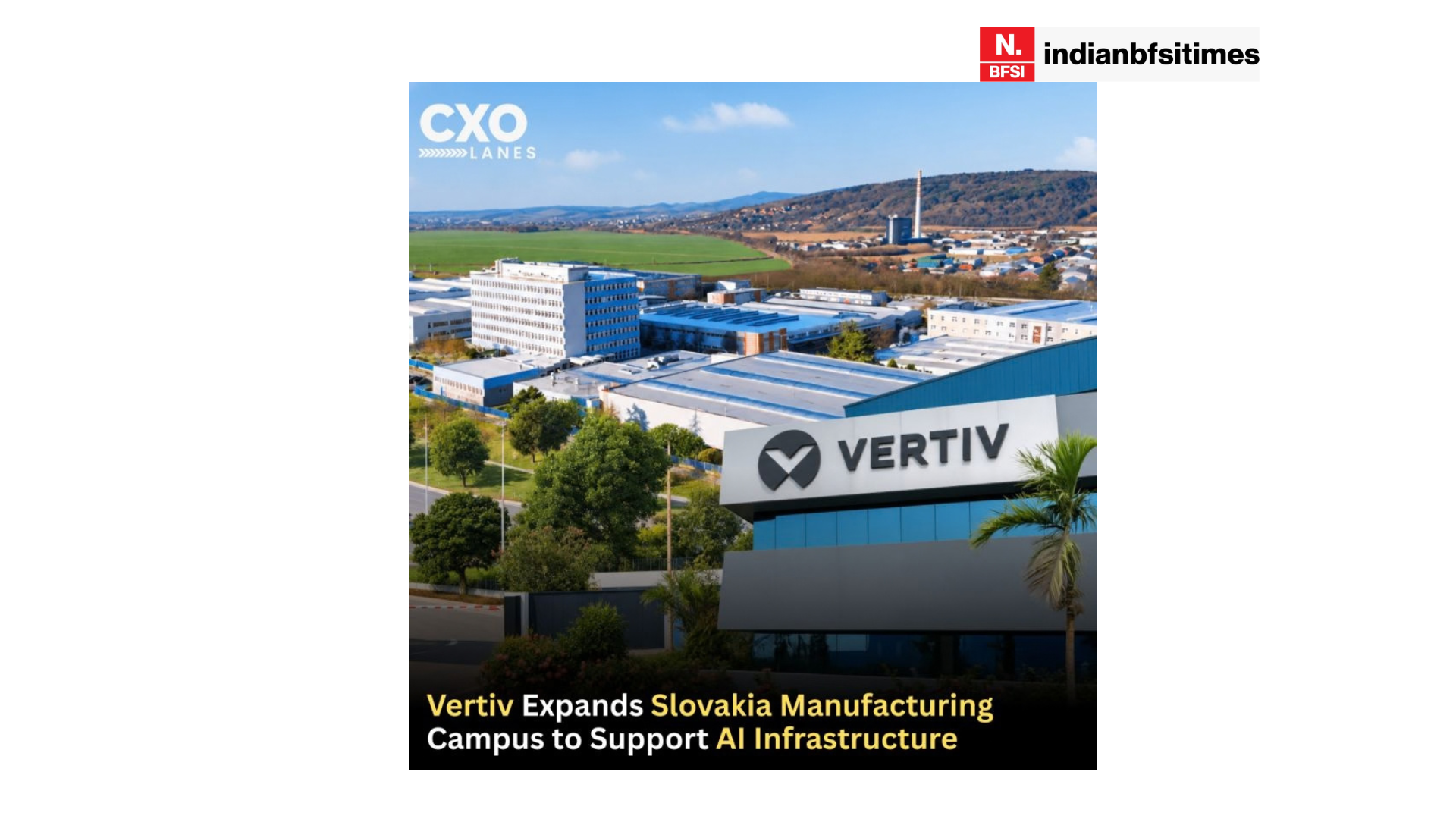
Vertiv is expanding its manufacturing campus in Nové Mesto nad Váhom, Slovakia, to strengthen its production capabilities for power and thermal management technologies supporting artificial intelligence (AI) and high-performance computing (HPC) infrastructure.
The expansion will increase manufacturing capacity for power systems, switchgear and advanced cooling technologies, including liquid cooling solutions designed for high-density computing environments. The move comes as data centre operators face increasing infrastructure requirements driven by the rapid adoption of AI workloads.
As part of the expanded campus, Vertiv will integrate engineering, operations and production capabilities at the facility. This integrated approach is expected to help the company respond more efficiently to customised infrastructure requirements while strengthening supply chain resilience across the EMEA region.
The company’s investment reflects the growing demand for specialised power and thermal management solutions as hyperscale, cloud and enterprise data centre operators expand their AI computing capacity. Increasing computing density associated with AI workloads is also driving greater demand for advanced cooling technologies capable of managing higher heat loads.
Liquid cooling has become an increasingly important technology for high-density computing environments, where conventional cooling systems may face limitations as rack power densities rise. Vertiv’s expanded manufacturing capabilities will support the production of technologies designed to address these evolving data centre requirements.
The Slovakian campus will also play a role in strengthening Vertiv’s regional manufacturing and supply capabilities. By bringing engineering and production functions together, the company aims to improve its ability to develop and deliver infrastructure solutions tailored to the requirements of customers across the EMEA market.
The expansion highlights the broader transformation underway in the data centre industry, where the rapid growth of AI is driving investments not only in computing capacity but also in the power, cooling and supporting infrastructure required to operate next-generation facilities.
By: Sanya Sharma